What Is CADTP? A Complete Guide to California's SUD Counselor Certification Through CADTP
If you are researching how to become a substance use disorder (SUD) counselor in California, you have likely come across the acronym CADTP alongside CCAPP as one of the organizations that can certify you to work in the field. But what exactly is CADTP, what credentials do they offer, and how does their certification pathway work? This comprehensive guide answers all of those questions.
CADTP: The Full Name and What It Stands For
CADTP stands for the California Association of DUI Treatment Programs. Despite the name's focus on DUI treatment, CADTP's scope extends well beyond DUI programs. CADTP is one of the recognized SUD counselor certifying organizations in California, authorized to issue credentials that allow professionals to work in any Department of Health Care Services (DHCS)-licensed or certified alcohol and drug treatment program in the state.
CADTP's mission is to "provide quality certification, at a reasonable cost, with a focus on customer service." The organization is dedicated to offering a streamlined certification process, continuous professional development opportunities, and a robust network of industry professionals for SUD counselors across California.
CADTP's Role in California SUD Counseling
CADTP serves as both a membership organization for DUI treatment programs and a certifying agency for individual SUD counselors. On the certification side, CADTP is authorized under California Administrative Code, Title 9, Section 13035 to certify individuals as alcohol and drug counselors. Their credentials are nationally accredited by the Institute for Credentialing Excellence (ICE) through the National Commission for Certifying Agencies (NCCA) and recognized by DHCS for eligibility to work in state-licensed treatment programs.
This means that a credential earned through CADTP carries the same legal weight as a credential earned through CCAPP when it comes to employment eligibility in California's SUD treatment system. Employers, treatment facilities, and state regulators all recognize CADTP credentials as valid proof of professional competence.
CADTP Credential Levels: SUDRC and SUDCC Explained
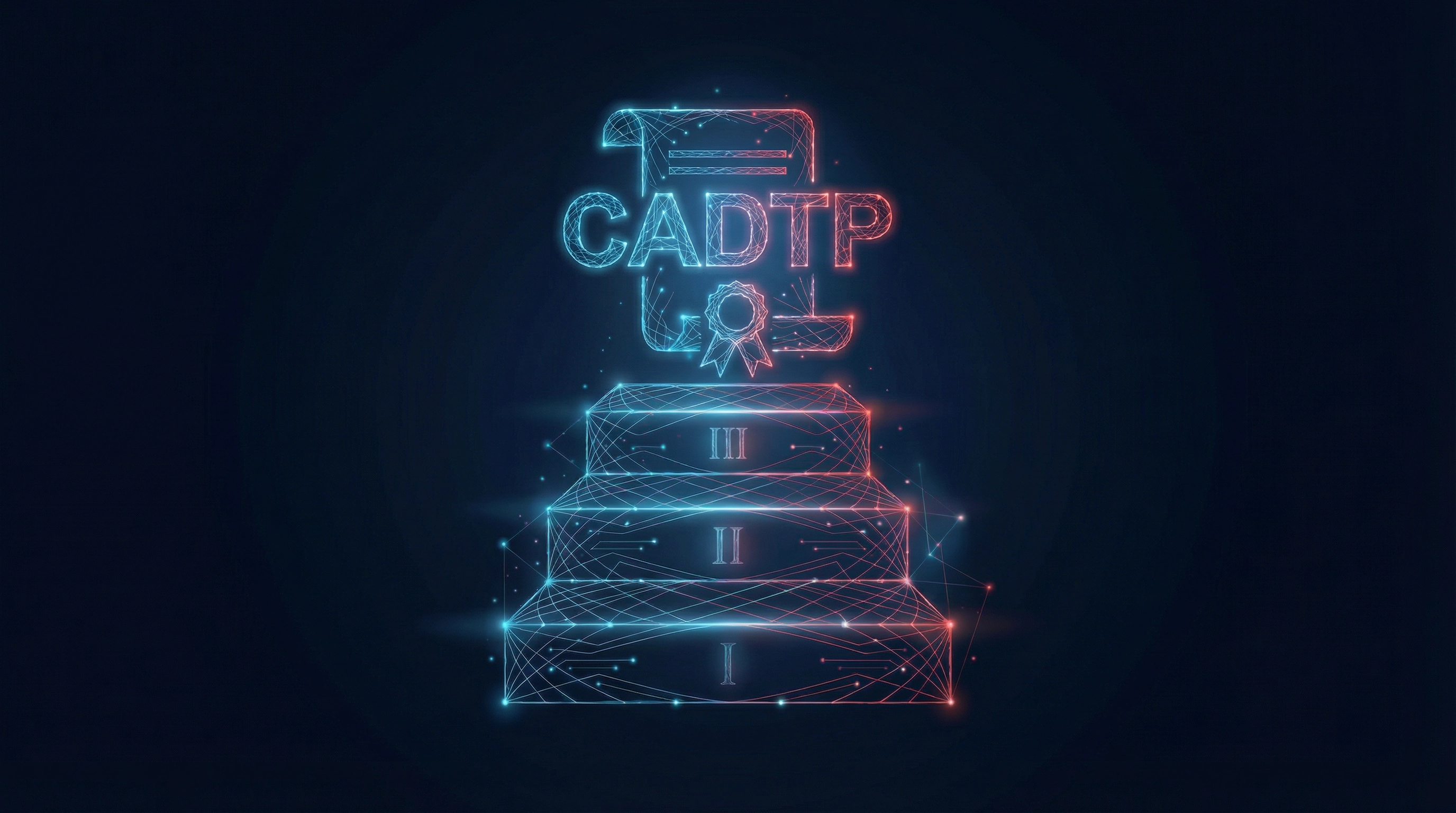
CADTP offers a structured career pathway that begins with registration and progresses through multiple certification levels. Understanding each level helps you plan your career trajectory from day one.
SUDRC — Substance Use Disorder Registered Counselor
The SUDRC is the entry-level registration that allows you to begin working in the SUD treatment field while you complete your education and accumulate supervised work experience. The SUDRC is not a certification — it is a registration status that serves as your starting point.
To obtain your SUDRC, you must complete a 9-hour Registrant Orientation Course and submit your application through CADTP. Once registered, you must renew annually while actively working toward full SUDCC certification. The SUDRC allows you to gain hands-on experience in treatment settings while you continue your education.
SUDCC — Substance Use Disorder Certified Counselor
The SUDCC is the first full certification level through CADTP. To earn your SUDCC, you must meet all of the following requirements:
- 315 hours of formal SUD education from an approved education provider
- 255 hours of supervised SUD training or practicum
- 2,080 hours of SUD-related work experience (equivalent to approximately one year of full-time work)
- Passed an approved certification examination
The SUDCC credential demonstrates that you have completed comprehensive education, gained real-world clinical experience, and passed a rigorous examination. It is the credential that qualifies you to work independently as a certified SUD counselor in California.
SUDCC II — Advanced Certification
The SUDCC II requires everything needed for SUDCC plus 5 years or 10,000 hours of SUD-related work experience. This level recognizes seasoned professionals who have demonstrated sustained commitment to the field through years of direct practice.
SUDCC II-CS — Clinical Supervisor
The SUDCC II-CS adds a clinical supervision component. In addition to the SUDCC II requirements, you must have at least 2 years of experience in the direct supervision of SUD counselors and have completed 40 hours of clinical supervisor education courses. This credential qualifies you to supervise other counselors working toward their own certification.
SUDCC III — Bachelor's Level
The SUDCC III requires a bachelor's degree in an SUD-related field in addition to 5 years or 10,000 hours of work experience and all base certification requirements. This level recognizes the combination of advanced education and extensive practical experience.
SUDCC III-CS — Bachelor's Level Clinical Supervisor
The SUDCC III-CS combines the bachelor's degree requirement with clinical supervision qualifications, including 2 years of supervisory experience and 40 hours of clinical supervisor education.
SUDCC IV — Master's Level
The SUDCC IV is the highest individual certification level, requiring a master's degree in an SUD-related field along with 5 years or 10,000 hours of work experience. This credential positions you at the top of the CADTP career ladder as a highly educated and experienced SUD professional.
SUDCC IV-CS — Master's Level Clinical Supervisor
The SUDCC IV-CS is the pinnacle of CADTP's credential structure, combining a master's degree, extensive work experience, and clinical supervision qualifications. Professionals at this level are qualified to lead clinical teams, supervise other counselors, and serve in senior leadership roles within treatment organizations.
CADTP Certification Levels at a Glance
| Level | Education | Experience | Supervision |
|---|---|---|---|
| SUDRC | 9-hr Orientation | N/A | N/A |
| SUDCC | 315 hrs + 255 hrs practicum | 2,080 hrs | N/A |
| SUDCC II | Same as SUDCC | 10,000 hrs / 5 yrs | N/A |
| SUDCC II-CS | + 40 hrs CS education | 10,000 hrs / 5 yrs | 2 yrs supervisory |
| SUDCC III | Bachelor's degree | 10,000 hrs / 5 yrs | N/A |
| SUDCC III-CS | Bachelor's + 40 hrs CS | 10,000 hrs / 5 yrs | 2 yrs supervisory |
| SUDCC IV | Master's degree | 10,000 hrs / 5 yrs | N/A |
| SUDCC IV-CS | Master's + 40 hrs CS | 10,000 hrs / 5 yrs | 2 yrs supervisory |
CADTP vs. CCAPP: Key Differences
Both CADTP and CCAPP are recognized by DHCS and accredited by NCCA, so credentials from either organization are valid for employment in California. However, there are some important differences to consider when choosing your credentialing pathway.
The most significant difference is IC&RC reciprocity. CCAPP is the only IC&RC member board in California, which means CCAPP credentials (CADC-I, CADC-II) can be transferred to other states through IC&RC reciprocity agreements. CADTP credentials do not carry this reciprocity. If you plan to practice exclusively in California, this may not matter. But if there is any chance you might relocate to another state in the future, CCAPP's IC&RC membership is a meaningful advantage.
On the other hand, CADTP offers a more granular career ladder with eight certification levels (SUDCC through SUDCC IV-CS) compared to CCAPP's three main levels (CADC-I, CADC-II, LAADC). CADTP's structure provides more incremental milestones for career progression, which some counselors prefer.
Many schools, including ADCSI, are approved by both CCAPP and CADTP. This dual approval means your education hours count toward either credentialing pathway, giving you the flexibility to choose the organization that best fits your career goals — or even pursue credentials from both.
How to Get Started with CADTP
Beginning your journey with CADTP involves the following steps:
1. Enroll in a CADTP-Approved Education Program. Your SUD education must come from a CADTP-approved provider for the hours to count toward your certification requirements. Programs approved by both CADTP and CCAPP give you the most flexibility.
2. Complete the 9-Hour Registrant Orientation Course. This is required before you can apply for your SUDRC registration. The orientation covers foundational topics that prepare you for professional practice in the SUD treatment field.
3. Apply for SUDRC Registration. Submit your application through CADTP's online application system. Once approved, you can begin working in SUD treatment settings while continuing your education and accumulating supervised work experience.
4. Complete Your Education and Experience Requirements. Work toward the 315 hours of formal education, 255 hours of supervised practicum, and 2,080 hours of work experience required for SUDCC certification.
5. Pass the Certification Examination. Once you have met all education and experience requirements, you are eligible to sit for the certification exam. Passing the exam earns you your SUDCC credential.
Why CADTP Certification Matters
Earning your SUDCC certification through CADTP demonstrates to employers, clients, and the broader treatment community that you have met rigorous professional standards. CADTP's NCCA accreditation ensures that their certification process meets the highest national benchmarks for professional credentialing. In a field where trust and competence are paramount, holding a recognized credential is essential for both your career advancement and the quality of care you provide to clients.
The SUD counseling profession in California continues to grow, with increasing demand for certified counselors across all treatment settings — including outpatient programs, Intensive Outpatient Programs (IOP), Partial Hospitalization Programs (PHP), residential treatment, detox facilities, and Medication-Assisted Treatment (MAT) programs. CADTP certification opens the door to all of these opportunities.
ADCSI: Approved by Both CADTP and CCAPP
The Alcohol and Drug Counseling Studies Institute (ADCSI) holds dual approval from both CADTP and CCAPP. This means your education hours at ADCSI count toward either the SUDCC credential (through CADTP) or the CADC credential (through CCAPP) — or both. ADCSI's 635-hour program includes 330 hours of didactic instruction, a 50-hour supervised practicum, and a 255-hour clinical externship, all delivered through a flexible, 100% online format.
Whether you choose to pursue certification through CADTP, CCAPP, or both, ADCSI prepares you with the education, clinical training, and exam preparation you need to succeed.
Ready to start your career in SUD counseling? Book a call with our Program Director or visit adcsinstitute.com to explore enrollment options.
Sources: CADTP (cadtp.org), CADTP Counselors (cadtpcounselors.org), California DHCS (dhcs.ca.gov), NCCA/ICE (credentialingexcellence.org)
Related Articles
- What Is CCAPP? Everything You Need to Know About California's Largest SUD Counselor Credentialing Organization
- CCAPP vs. CADTP: Which Certification Board Is Right for You?
- The 3 RADT Levels in California: Trainee I, Trainee II & Intern Explained
- What Is AB 2473 and What It Means for Registrants (RADTs & SUDRCs) in California
- How to Become a Substance Use Disorder (SUD) Counselor in California (2026 Complete Guide)
Questions About Your Education?
Book a free call with our Program Director. We'll review your current education hours and help you build a plan.